

After attending the Safe Act and Balance Act press conference on January 6, 2026 at the State Capitol, it became clear that many of our assumptions about the role computers play in the classroom may be misdirected. Here’s a synopsis of the clarifying facts Jared Cooney Horvath, PhD, shared that may help parents and educators cut through the misassumptions around tech in schools.
Don’t kids need to be on computers in order to function in a high-tech world?
According to Dr. Horvath, computers are absolutely necessary for computer-related activities, such as coding and typing. But those kinds of skills aren’t typically necessary until middle school. When it comes to any other educational subject or activity, learning from a screen has actually proven to be problematic. According to the study Dr. Horvath referenced and which he cites in his book, Digital Delusion: How Classroom Technology Harms Our Kids’ Learning–And How to Help them Thrive Again, the longer kids spend on screens in classrooms, the more poorly they perform academically.
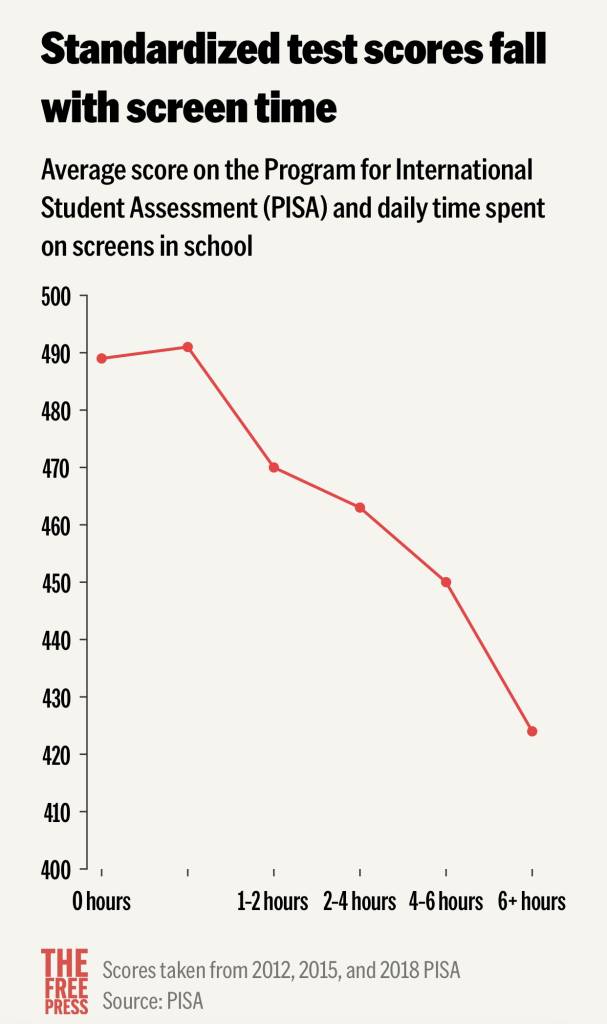
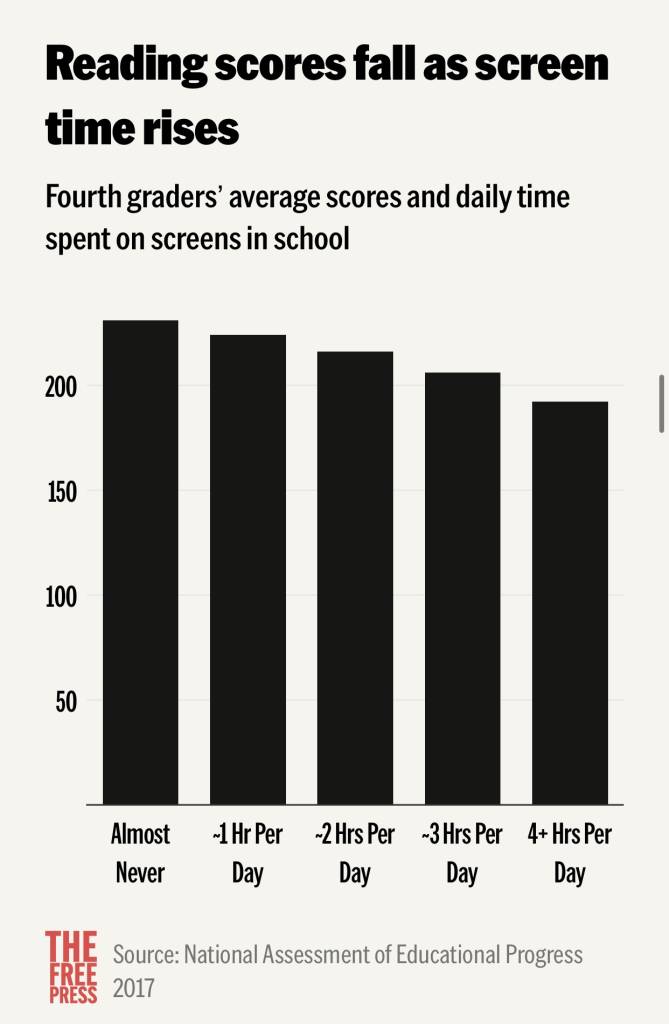
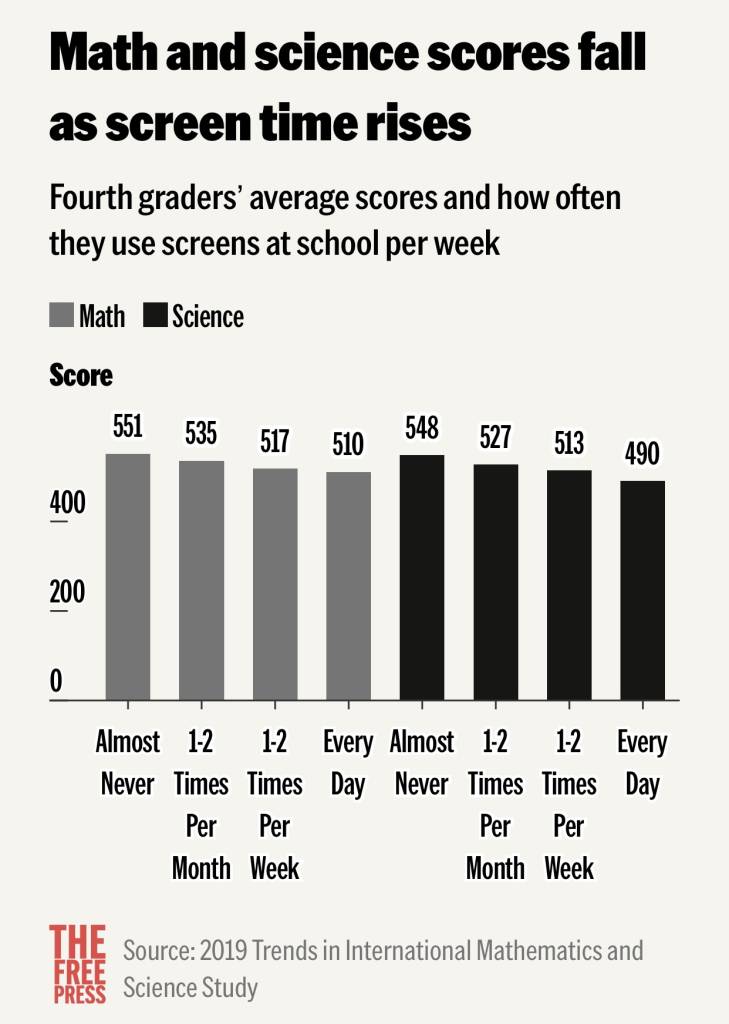
Interestingly, Dr. Horvath pointed out that Boomers are more tech-literate than those from Gen Z. The reason for this? Because they know how to center their attention on the task at hand for extended periods of time. That’s a skill many Gen Z-ers often lack. What really matters, says Horvath, is not learning how to use a computer, but knowing how to really think. That’s the marketable skill students need most. That’s the indispensable ability necessary for lifelong success.
All of us live in human bodies for a reason. Our bodies are the instruments through which we experience the world around us. In Dr. Horvath’s research, he found that reading from a screen is less effective than reading from a real book. And writing on an actual page has proven to have advantages, cognitively, over typing on a computer. This is because corporeal interactions are stimulating in ways that screen-based interactions fail to be.
Dr. Horvath also talked about the value of ‘empathetic learning’ in the classroom. When kids connect in real time with a real human teacher, learning outcomes are far more positive when compared with computer-based learning. That’s because we’re wired to interact and connect with other human beings. Brain scans reveal this is the case. Other humans hold our interest and engage our minds and senses with greater intensity and efficacy than a screen can.
The other problem with a computer-centered education is that our attention becomes fragmented. In trying to multi-task on a screen, our ability to comprehend and retain information becomes compromised. When students work from a screen in the classroom, there are many potential distractions–such as customizing their avatars, experimenting with other elements of the computer, and opening new tabs or apps. Because it’s not possible to monitor each student all the time while on their computers, kids are inefficient, quickly become bored, and are prone to spend the time exploring the capacity of the computer, rather than exploring the capacity of their own minds. Rapidly switching from one task to another makes us less able to absorb material, Dr. Horvath tells us.
Dr. Horvath’s prompt response? “Re-introduce the computer lab.”
When teachers have to escort their classes to another room where computers are used expressly as a tool, it creates friction. According to Dr. Horvath, that’s exactly what’s needed. Schools have to intentionally work to schedule a time and space in which students can learn how to program, how to type, how to practice online awareness, etc. In this way, tech education has a specific time, place, and purpose that is distinctly separate from learning reserved for the classroom. As such, it’s less likely to inhibit the learning process.
In Dr. Horvath’s words, “Go back to 1999. Buy a printer. Go analog.” Teachers who do this may increase their workload when it comes to grading and data entry, but the results are unmistakable. As teachers revert to older methods used 20 plus years ago, learning improves. Students are more focused. Scores improve. There’s less need for the teacher to constantly redirect, and students’ interactions are more positive.
Dr. Horvath finished the conference with this memorable line: “What’s really needed isn’t digital literacy. It’s life literacy.” Teach students how to learn. How to interact with others. How to pay attention. How to expand their minds through the slow, remarkable process that has worked for thousands of years.
The bottom line? Tech has over-extended its reach within our schools, and its place in the classroom may be doing more harm than good. If that’s the case, it begs the question: What are we going to do about it?